Lohri 2027 is on Wednesday, 13 January 2027. The bonfire is lit after sunset: 5:47 PM in Amritsar, 5:41 PM in Chandigarh, 5:44 PM in Delhi and 5:53 PM in Jaipur. The Makar Sankranti moment this year is on Thursday, 14 January at 9:07 PM and the Sankranti festival is on Friday, 15 January, so there is a one-day gap between Lohri and Sankranti.
Lohri 2027: key timings
| Detail | Time |
|---|---|
| Lohri | Wednesday, 13 January 2027 |
| Bonfire | After sunset, Amritsar from 5:47 PM |
| Best window (pradosh kaal, Amritsar) | 5:47 PM to 8:11 PM |
| Tithi | Paush Shukla Panchami till 1:06 PM on 13 Jan, then Shashthi |
| Makar Sankranti moment | Thursday, 14 January, 9:07 PM |
| Makar Sankranti festival and punya kaal | Friday, 15 January, sunrise to sunset |
| Sunrise / sunset (Jaipur, 13 Jan) | 7:17 AM / 5:53 PM |
When is Lohri 2027 and why 13 January
Lohri is a solar-calendar festival; it does not depend on the lunar tithi. It is celebrated on the last night of the solar Paush month, the night before Makar Sankranti. In most years Sankranti falls on 14 January and Lohri on 13 January.
In 2027 the Sun enters Makara on 14 January at 9:07 PM. Because the transit is after sunset, its punya kaal is counted from the next sunrise and the festival is observed on 15 January. Punjabi tradition lights the Lohri fire on the last day of solar Paush, which is 13 January. So this year the sequence is Lohri on the 13th, the Sankranti moment on the 14th and the Sankranti bath and charity on the 15th.
Some families read Lohri as "the night before the Sankranti festival" and light the fire on the evening of 14 January instead. Both are accepted; Apna Panchang follows the last-night-of-solar-Paush rule and lists 13 January.
Lohri 2027: sunset and bonfire time by city
The times below come from the sunrise-based engine of Apna Panchang. Light the fire after sunset; the pradosh window (about 2 hours 24 minutes after sunset) is considered best for the fire puja.
| City | Sunrise | Sunset | Pradosh kaal (bonfire) | Rahu kaal |
|---|---|---|---|---|
| Amritsar | 7:30 AM | 5:47 PM | 5:47 to 8:11 PM | 12:39 to 1:56 PM |
| Chandigarh | 7:21 AM | 5:41 PM | 5:41 to 8:05 PM | 12:31 to 1:49 PM |
| Delhi | 7:15 AM | 5:44 PM | 5:44 to 8:08 PM | 12:29 to 1:48 PM |
| Jaipur | 7:17 AM | 5:53 PM | 5:53 to 8:17 PM | 12:35 to 1:55 PM |
| Bikaner | 7:29 AM | 6:01 PM | 6:01 to 8:25 PM | 12:45 to 2:04 PM |
| Jodhpur | 7:27 AM | 6:05 PM | 6:05 to 8:29 PM | 12:46 to 2:06 PM |
| Lucknow | 6:56 AM | 5:33 PM | 5:33 to 7:57 PM | 12:14 to 1:34 PM |
| Mumbai | 7:14 AM | 6:19 PM | 6:19 to 8:43 PM | 12:47 to 2:10 PM |
| Ahmedabad | 7:22 AM | 6:13 PM | 6:13 to 8:37 PM | 12:48 to 2:09 PM |
| Kolkata | 6:18 AM | 5:11 PM | 5:11 to 7:35 PM | 11:45 AM to 1:06 PM |
| Indore | 7:09 AM | 6:01 PM | 6:01 to 8:25 PM | 12:35 to 1:56 PM |
13 January is a Wednesday, so rahu kaal falls in the afternoon and does not touch the evening fire.
Every vrat, muhurat and rahu kaal offline, with alarms. Lohri and Makar Sankranti timings from your own city's sunset: Panchang 2026 app on Google Play.
How Lohri is celebrated
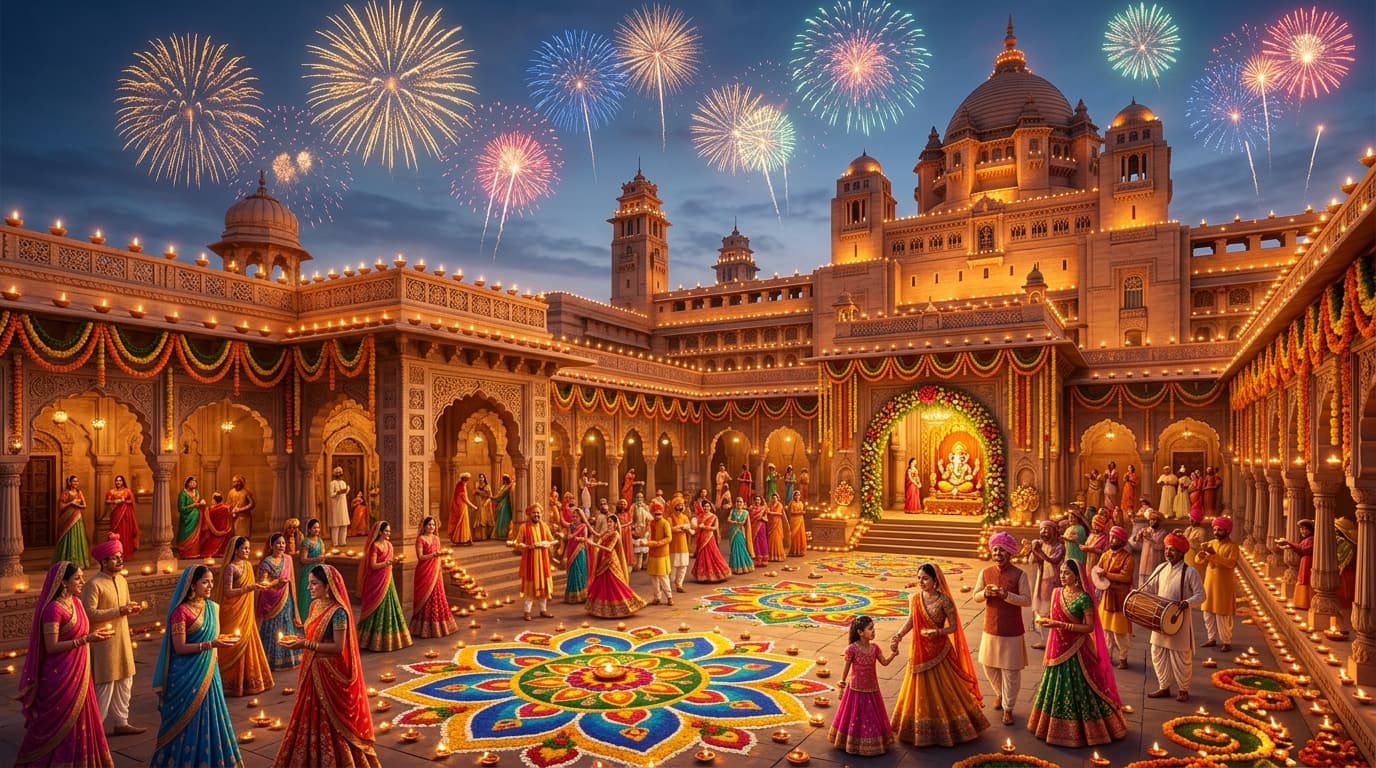
In the evening a pile of wood and dung cakes is built in the courtyard and lit after sunset. The family circles the fire and offers til (sesame), gud (jaggery), rewri, peanuts, popcorn and gajak, chanting "Ishwar aaye, dalidar jaaye", a prayer for prosperity to come and poverty to leave.
The prasad is shared, and the night continues with dhol, bhangra and gidda. Dinner is usually sarson ka saag with makki ki roti, followed by kheer or sesame sweets. The next morning, on Maghi (Makar Sankranti), khichdi and til-gud are given in charity.
The first Lohri of a bride or a newborn
Homes that saw a wedding or a birth in the past year celebrate Lohri on a bigger scale. Relatives are invited for the first Lohri of the new bride or the baby; the couple or the child is seated before the fire, blessed with til and rewri, and given gifts. In Punjab the first Lohri of a baby girl is now celebrated with the same enthusiasm.
The story of Dulla Bhatti and what Lohri means
Lohri songs carry the refrain "Sundar mundariye ho, tera kaun vichara, Dulla Bhatti wala". The tale goes that in the Mughal era a brave man named Dulla Bhatti protected the poor of Punjab. He rescued two girls, Sundri and Mundri, from being carried away, lit a fire in the forest and married them off himself, acting as their father. All he had to give as kanyadaan was a handful of sugar. The song has been sung around the Lohri fire ever since.
Lohri also marks the ripening of the rabi crop, especially sugarcane and mustard, and the end of the longest winter nights as the Sun turns north. That is why both fire and the Sun are worshipped on this night.
The day after Lohri: Makar Sankranti 2027
This year the Sun enters Makara on 14 January at 9:07 PM, the day after Lohri, and Kharmas, which began on 16 December, ends at the same moment. The punya kaal for the holy bath and charity is on Friday, 15 January from sunrise (Jaipur 7:17 AM) to sunset (5:55 PM), with the maha punya kaal in the first roughly 1 hour 40 minutes after sunrise.
Every vrat, muhurat and rahu kaal offline, with alarms. Computed from your city's sunrise: Panchang 2026 app on Google Play.
For city-wise punya kaal see the Makar Sankranti 2027 page; the full panchang, rahu kaal and choghadiya for 13 January are also on the site.